
About Medicine
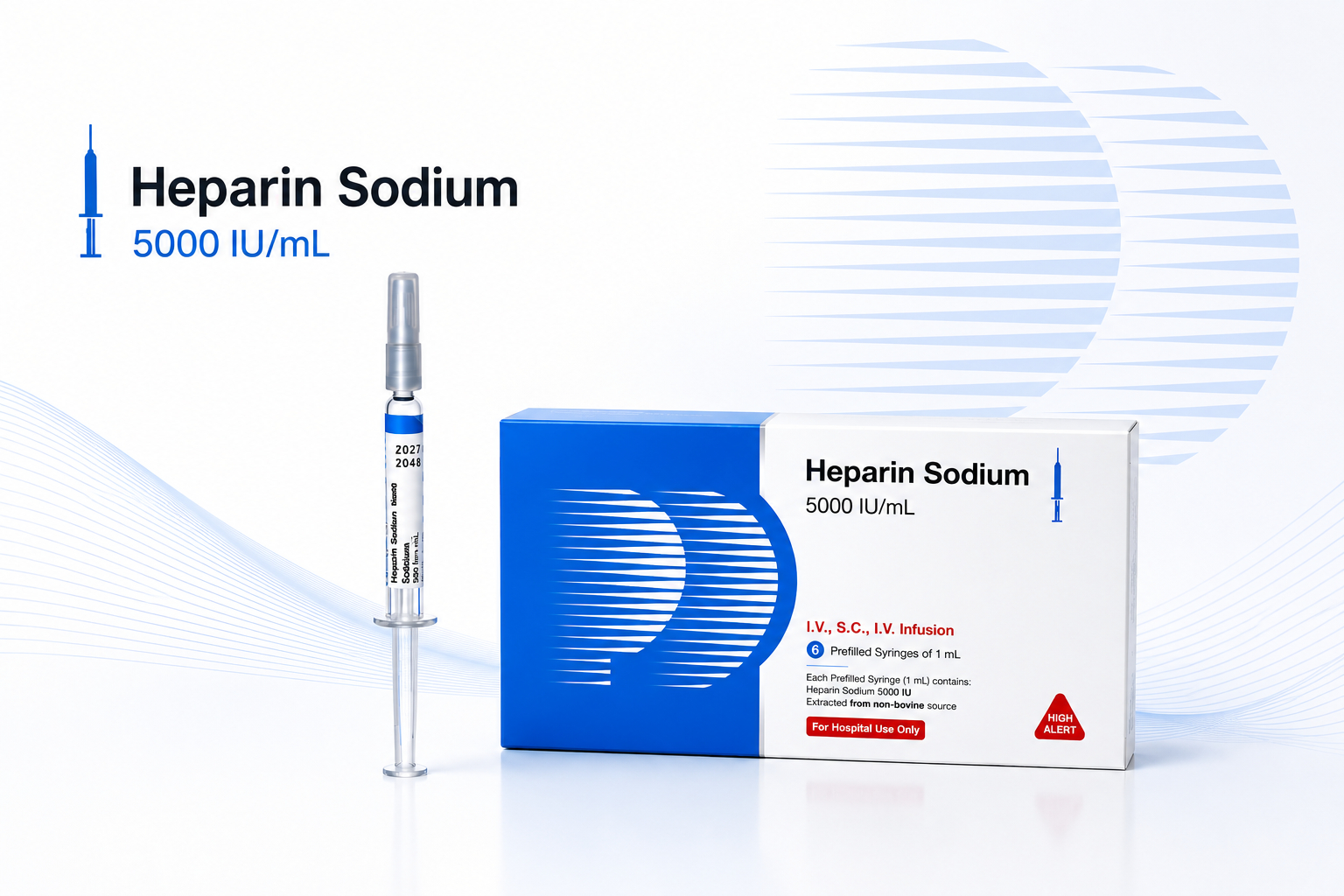
Heparin sodium is an anticoagulant medicine used for the prevention and treatment of thromboembolic disorders. It acts by enhancing the activity of antithrombin III and inhibiting thrombin and other activated coagulation factors.
Heparin may be used for the prevention and treatment of venous thromboembolism, pulmonary embolism, thromboembolic complications associated with atrial fibrillation or other clinical conditions, prevention of clot formation in cardiovascular surgery, and as an anticoagulant in blood transfusion, extracorporeal circulation, and dialysis procedures.
Pharmaceutical form
– Solution for injection: Sterile – Clear – Colorless to pale yellow – Without visible particles
– Supplied as a pre-filled syringe
– Each pre-filled syringe contains heparin sodium 5000 IU/mL
– Pack size: six pre-filled syringesQualitative Composition
– Active substance: Heparin sodium
– Excipients: Sodium hydroxide, Sodium chloride, Hydrochloric acid, Water for injectionGuidance to patients
Heparin Sodium Pre-filled Syringe should be used according to the physician’s prescription and after appropriate instruction by healthcare professionals.
Heparin has no reported effect on alertness or the ability to drive or operate machinery.
Bleeding is the most important adverse reaction associated with heparin. Any unexplained bleeding or bruising should be reported to the physician. Patients should inform their dentist or healthcare provider that they are receiving heparin.
In case of overdose, medical advice should be sought immediately, as excessive heparin exposure may cause bleeding. If a dose is missed, the patient should contact the physician. A double dose should not be administered to compensate for a missed dose.
Each pre-filled syringe is for single use only, and any remaining solution should be discarded after administration.
Use
Heparin is used for the prevention and treatment of thromboembolic disorders, including venous thromboembolism and pulmonary embolism.
It is also used for the prevention of thromboembolic complications associated with atrial fibrillation or other clinical conditions, prevention of clot formation in cardiovascular surgery, and as an anticoagulant in blood transfusion, extracorporeal circulation, and dialysis procedures.
Dosage and administration
The dose should be determined by the treating physician according to the indication, route of administration, patient-specific risk of thrombosis and bleeding, and laboratory monitoring parameters.
Heparin sodium may be administered by deep subcutaneous injection or intravenously as direct injection or continuous infusion. It must not be administered intramuscularly.
For low-dose thromboprophylaxis, 5000 IU may be administered subcutaneously every 8 to 12 hours.
For systemic anticoagulation, intravenous or subcutaneous dosing should be individualized and adjusted according to institutional protocols and coagulation monitoring, including aPTT and/or anti-factor Xa activity where appropriate.
For atrial fibrillation, venous thromboembolism, hemodialysis, continuous renal replacement therapy, and perioperative thromboprophylaxis, dosing should be selected according to the clinical condition, bleeding risk, and local treatment protocol.
No initial dose adjustment is generally required in renal impairment. In hepatic impairment, dose adjustment should be guided by aPTT and anti-factor Xa activity. Elderly patients, particularly those over 60 years of age, may require lower doses due to increased sensitivity to heparin.
Contraindications
Heparin Sodium Pre-filled Syringe should not be used in the following conditions:
-
Hypersensitivity to heparin or any excipient of the product, except in life-threatening situations where heparin use is essential and alternative anticoagulants cannot be used.
-
Severe thrombocytopenia.
-
History of heparin-induced thrombocytopenia.
-
History of heparin-induced thrombocytopenia with thrombosis.
-
Uncontrolled active bleeding.
-
Inability to perform appropriate coagulation tests at suitable intervals, applicable to full-dose heparin therapy.
-
Warning and Precautions
Heparin should be used with caution in patients at increased risk of bleeding. Treatment should be discontinued if significant bleeding occurs, and severe bleeding or overdose may require protamine administration.
Caution is required in patients with thrombocytopenia, platelet dysfunction, severe hypertension, recent surgery or invasive procedures, gastrointestinal bleeding or ulceration, renal or hepatic impairment, diabetic or hypertensive retinopathy, and in elderly patients, particularly women.
Heparin-induced thrombocytopenia may occur and can be associated with new thrombosis. Platelet count should be monitored, and treatment should be discontinued if HIT is suspected.
Heparin may cause hypersensitivity reactions, hyperkalemia, increased liver enzymes, and osteoporosis with long-term use. Because heparin is available in different concentrations, the product strength should be checked carefully before administration.
Pregnancy and breast-feeding
Heparin does not cross the placenta and may be used as an anticoagulant during pregnancy. It may be used for the prevention and treatment of thromboembolism in pregnant women, although low molecular weight heparin is generally preferred.
Heparin is not excreted in breast milk and may be used during breast-feeding.
Side Effects
Like all medicines, heparin may cause adverse reactions, although not all patients experience them.
The most important adverse reaction is bleeding. Thrombocytopenia is very common, and heparin-induced thrombocytopenia may occur. Heparin-induced thrombocytopenia may be associated with thromboembolic complications such as skin necrosis, pulmonary embolism, limb gangrene, cerebrovascular events, or myocardial infarction.
Post-marketing adverse reactions include adrenal hemorrhage, anaphylactic shock, burning sensation in the feet, cyanotic extremities, skin ulceration, hematoma, bleeding, hypersensitivity reactions, increased serum alanine aminotransferase, increased serum aspartate aminotransferase, pain in the extremities, local irritation, local erythema, local pain, non-immune anaphylaxis, osteoporosis, ovarian hemorrhage, peripheral ischemia, priapism, pruritus, retroperitoneal hemorrhage, skin necrosis, aldosterone synthesis suppression, thrombosis associated with heparin-induced thrombocytopenia, and transient alopecia.
Drug Interactions
Concomitant use with other anticoagulants, antiplatelet agents, thrombolytics, salicylates, nonsteroidal anti-inflammatory drugs, and medicines or supplements with anticoagulant or antiplatelet effects may increase the risk of bleeding.
Heparin may increase the effect of medicines affecting coagulation or potassium balance, including vitamin K antagonists, potassium-sparing diuretics, angiotensin-converting enzyme inhibitors, and angiotensin II receptor blockers.
The anticoagulant effect of heparin may be increased by antithrombin, antiplatelet agents, thrombolytics, NSAIDs, omega-3 fatty acids, systemic vitamin E, and some herbal products with anticoagulant or antiplatelet properties.
The effect of heparin may be reduced by estrogen derivatives, progestins, nitroglycerin, or tobacco smoke. Heparin may reduce the effect of human factor X and levothyroxine.
Monitoring
During treatment with heparin, monitoring may include clinical signs of bleeding or bruising, platelet count, aPTT, anti-factor Xa activity, and other laboratory parameters according to the route, dose, indication, and institutional protocol.
Patients receiving full-dose heparin require appropriate coagulation monitoring at suitable intervals. Platelet count should be monitored for the detection of heparin-induced thrombocytopenia. Potassium levels may require monitoring in patients at risk of hyperkalemia.
Mechanism of action
Heparin enhances the activity of antithrombin III, leading to inhibition of thrombin and other activated coagulation factors including XIIa, XIa, Xa, IXa, and plasmin. By inhibiting thrombin activity, heparin prevents the conversion of fibrinogen to fibrin.
Heparin also stimulates the release of lipoprotein lipase, which hydrolyzes triglycerides into glycerol and free fatty acids.
Pharmacokinetics
Absorption: About 20% in SC route. After subcutaneous administration, Cmax was achieved within 5 to 24 hours.
Distribution: About 9 L
Elimination: In adult and pediatric patients with CKD, the elimination half-life (t1/2) of plasma erythropoietin after intravenous administration of PDpoetin® ranged from 4 to 13 hours.
In Anemic cancer patients the elimination half-life (t1/2) of plasma erythropoietin after intravenous administration of PDpoetin® ranged from 16-67 hours.
The pharmacokinetic profile of PDpoetin® in children and adolescents appeared similar to that of adults.
The pharmacokinetics of PDpoetin® has not been studied in patients with HIV infection.
Preparation and injection
Heparin Sodium Pre-filled Syringe may be administered subcutaneously or intravenously according to the physician’s prescription. It must not be administered intramuscularly, as intramuscular injection may cause pain and hematoma.
For subcutaneous administration, heparin should be injected deeply into the fatty tissue of the left or right abdominal area above the iliac crest. The injection site should be rotated between the left and right side of the abdomen.
Before administration, the pre-filled syringe should be inspected carefully. The product should not be used if the syringe is cracked or damaged, if the cap is missing or improperly attached, or if the solution is cloudy, discolored, or contains visible particles.
Hands and the injection site should be washed and dried before injection. The cap should not be removed until the product is ready for administration.
A site on the abdomen should be selected for injection. Injection into areas with redness, inflammation, bruising, wounds, cuts, or irritation should be avoided.
The full needle should be inserted vertically at a 90-degree angle into the skin, and the injection should be performed slowly and steadily. The injection site should not be massaged after administration to reduce the risk of bruising.
Storage
Store below 30°C, protected from direct sunlight and in the original package. Do not freeze.
Keep out of the sight and reach of children.
Do not use after the expiry date printed on the carton and syringe label.
The solution should be clear, colorless to pale yellow, and free from visible particles. Do not use if discoloration or particles are observed. Slight discoloration does not affect the therapeutic efficacy of the product.
This product is for single use only. Discard any remaining solution after use.